Best Emotional Support Animals for North Dakota Apartments — A Clinician-Vetted Lineup
Finding the right emotional support animal for your North Dakota apartment is not simply a matter of choosing the pet you find most adorable. It is a clinical, practical, and legal decision — one that intersects your therapeutic needs, your living space, your neighbors' comfort, and the federal protections available to you under the Fair Housing Act (FHA). HUD's guidance notice FHEO-2020-01, Assessing a Person's Request to Have an Animal as a Reasonable Accommodation Under the Fair Housing Act, makes clear that a landlord may not impose breed restrictions, size limits, or pet fees on a properly documented emotional support animal. That protection, however, begins with one essential document: a valid ESA letter issued by a licensed mental health professional (LMHP) licensed in North Dakota.
The list below was assembled with input from the clinical philosophy that guides every evaluation at ESALetter — namely, that the animal must genuinely serve the individual's therapeutic goals, not merely satisfy a housing technicality. Each entry considers temperament, noise profile, space requirements, allergen potential, and the practical realities of apartment life in cities like Fargo, Bismarck, Grand Forks, and Minot, where rental housing stock often skews toward compact units and multi-tenant buildings. Whether you are exploring a dog, a cat, or something smaller, this guide will help you enter your clinician consultation — the essential first step — better informed.
Important Disclaimer: This article is informational in nature and does not constitute medical, mental health, or legal advice. Whether an emotional support animal is therapeutically appropriate for you is a determination that must be made by a licensed mental health professional licensed in North Dakota. For questions about landlord disputes or FHA enforcement, consult a North Dakota-licensed attorney or your local legal aid office.
What Makes an ESA "Apartment-Friendly" in North Dakota?
Before diving into the ranked list, it is worth establishing the criteria a clinician — and a thoughtful tenant — should weigh. North Dakota winters are long and genuinely harsh; an animal that requires extended outdoor exercise during a January blizzard in Bismarck is not a practical ESA for most apartment dwellers. Indoor adaptability is therefore weighted heavily in the assessments below. Equally important is noise: multi-unit buildings in Fargo or Grand Forks mean that a persistently vocal animal can generate neighbor complaints and, in rare cases, landlord friction that even FHA protections cannot eliminate gracefully.
Additionally, a licensed clinician evaluating your request for a North Dakota ESA housing letter will consider whether the animal's care requirements are realistically manageable given your mental health status, schedule, and support network. An animal that produces anxiety rather than alleviating it is not a therapeutically sound choice, regardless of how well it might fare legally. The best ESA for you is the one a qualified clinician determines is appropriate after a genuine, individualized evaluation — not a guaranteed outcome, but a thoughtful professional judgment.
The Clinician-Vetted Lineup: 8 Best ESAs for North Dakota Apartments
-
1. Mixed-Breed Dogs of Small to Medium Size
Among the licensed esa animals North Dakota residents most frequently discuss during clinical consultations, small-to-medium mixed-breed dogs consistently rank at the top. Mixed breeds — often adopted from shelters like the Humane Society of Cass County or the Bismarck Mandan Humane Society — tend to exhibit what behaviorists call "hybrid vigor": a generally mellower, more adaptable temperament than some high-strung purebreds. For apartment dwellers managing anxiety, depression, PTSD, or mood disorders, a calm, affectionate dog in the 15–40-pound range offers meaningful physical proximity and routine-building structure without overwhelming a compact living space.
The practical considerations for North Dakota are significant. A dog of this size can receive meaningful exercise through indoor play, hallway walks, and brief outdoor excursions — manageable even in February temperatures that routinely drop below zero in Fargo. They are also less likely to trigger noise complaints than larger, higher-energy breeds that bark out of frustration when under-exercised. That said, any dog requires behavioral consistency, and many individuals find that ESA training basics — teaching commands like "sit," "stay," and "quiet" — dramatically improve the apartment experience for both the handler and the building community.
It is worth noting that even though the FHA prohibits breed-specific bans for ESAs, a landlord may still request documentation and assess whether the specific animal poses a direct threat. Ensuring your dog is well-socialized and does not exhibit aggressive behavior protects your housing rights in practice. Explore a fuller breakdown of the best ESA dog breeds for North Dakota apartments to find the right match for your lifestyle.
Practical Takeaway: A small-to-medium mixed-breed dog from a North Dakota shelter is one of the most therapeutically versatile and apartment-practical ESA choices available, provided the animal is calm, socialized, and cared for consistently.
-
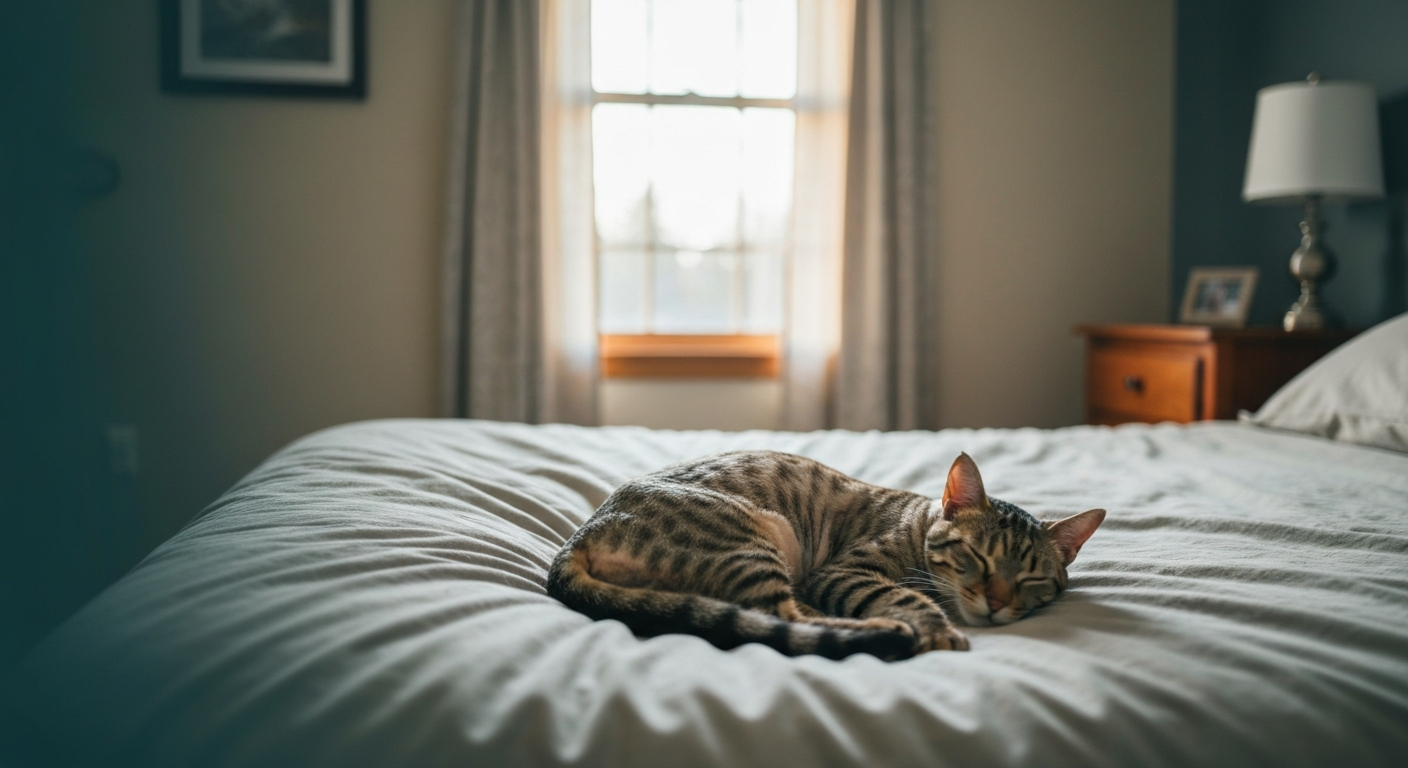
2. Domestic Short-Hair Cats
For North Dakota apartment residents who prefer a quieter, lower-maintenance companion, the domestic short-hair cat is a compelling option that licensed clinicians frequently discuss in the context of mood regulation and loneliness mitigation. Cats offer meaningful emotional attunement — they seek out distressed owners with notable regularity, a behavior supported by animal-assisted intervention research — while demanding far less of the structured daily routine that dogs require. For individuals managing conditions such as major depressive disorder or generalized anxiety disorder, that lower demand profile can itself be therapeutic.
From a purely apartment-friendly standpoint, domestic short-hair cats are nearly ideal for North Dakota's housing realities. They are fully indoor animals, meaning the state's brutal winters are irrelevant to their well-being. They produce little noise — a soft meow rarely troubles neighbors — and their allergen output, while real, is significantly lower than that of long-haired breeds like Persians or Maine Coons. A standard litter box in a small utility closet, a scratching post, and a window perch are often sufficient to keep a well-adjusted domestic short-hair content in a one-bedroom Fargo apartment.
Under FHEO-2020-01, a landlord with a "no pets" policy cannot legally charge a pet deposit for your ESA cat once you have submitted a valid ESA letter from a North Dakota-licensed clinician. This is a meaningful financial protection in a rental market where pet deposits of $300–$500 are common. Learn more about why cats are among the most practical options in our dedicated guide to ESA cats as quiet companions in North Dakota.
Practical Takeaway: Domestic short-hair cats are an excellent best ESA for apartment North Dakota residents who benefit from consistent emotional presence but need an animal whose care demands align with lower-energy days.
-
3. Rabbits
Rabbits are among the most underappreciated North Dakota apartment-friendly ESA options, and their profile is increasingly being recognized in clinical discussions around anxiety and sensory-grounding therapies. A well-socialized rabbit — breeds such as the Holland Lop, Mini Rex, or Lionhead are particularly noted for docility — is quiet, odor-manageable with proper care, and physically gentle in a way that makes it well-suited to individuals for whom a dog's energy level feels overwhelming. The tactile experience of stroking a rabbit's fur has been associated with measurable reductions in cortisol levels in several small-scale studies.
Rabbits are entirely indoor animals, which makes them a particularly sensible ESA choice in North Dakota's climate. They do not bark, do not require outdoor walks, and can thrive in a modest living space when provided with a proper enclosure, daily out-of-cage time, and a diet of hay, fresh vegetables, and pellets. Their primary care demands — litterbox cleaning and feeding — are manageable, though prospective handlers should understand that rabbits live 8–12 years and require veterinary care, including spaying or neutering to reduce hormonal aggression.
From a legal standpoint, rabbits qualify as emotional support animals under the FHA in the same manner as dogs or cats — the species is not restricted by federal law, and HUD's FHEO-2020-01 notice makes no species-based limitations. A valid ESA letter from a North Dakota-licensed LMHP is the operative document. Read our detailed guide on rabbits as emotional support animals in North Dakota for habitat setup tips and tenant rights specifics.
Practical Takeaway: A well-socialized rabbit is a quiet, space-efficient, and therapeutically meaningful ESA choice that is well-suited to North Dakota's indoor apartment lifestyle — particularly for individuals who benefit from gentle tactile grounding.
-
4. Guinea Pigs
Guinea pigs occupy a unique therapeutic niche: they are vocal enough to be engaging — their characteristic "wheeks" and purrs provide auditory companionship — but quiet enough that they will not disturb neighbors through shared walls. For individuals managing social anxiety or isolation-driven depression, a guinea pig's friendly, interactive nature offers consistent low-stakes social engagement that can scaffold broader therapeutic progress. They are also among the more forgiving ESA choices for individuals who are managing conditions that affect energy levels and daily functioning, since their care routine, while regular, is uncomplicated.
Housing a pair of guinea pigs — they are social animals and generally fare better in bonded pairs — requires a cage of at least 7–8 square feet, which is easily accommodated in any North Dakota apartment. They produce no dander-related allergen profile comparable to cats or dogs, making them a strong option for buildings where other tenants may have sensitivities. Their lifespan of 4–7 years is a manageable long-term commitment, and they are routinely available through North Dakota shelters and rescue organizations, supporting local adoption networks.
A clinician evaluating whether guinea pigs may be a therapeutically appropriate ESA for a specific individual will consider whether the handler can maintain a consistent care schedule and whether the animal's interactive but less physically demonstrative affection style aligns with the client's therapeutic needs. Not every person benefits from the same type of animal-human bond, and that individual assessment is precisely why a legitimate ESA letter requires a real clinical evaluation — not an instant checkbox process.
Practical Takeaway: Guinea pigs are an apartment-practical, low-allergen ESA option with meaningful interactive quality, best suited to individuals who find comfort in routine care and gentle, consistent companionship.
-
5. Domestic Short-Hair Cats (Older, Senior Cats)
While already addressed as a category, senior cats — typically aged seven years or older — deserve specific mention as a distinct and often clinically advantageous subset. Older cats from shelters are dramatically less likely to be adopted, yet they offer a temperament profile that is frequently more aligned with apartment living and therapeutic stability than their younger counterparts. Senior cats tend to sleep more, vocalize less, and seek out calm companionship in a manner that many individuals managing mood or anxiety disorders find particularly well-matched to their needs.
For North Dakota residents in smaller apartments — a studio in Minot or a one-bedroom in Wahpeton — a senior cat's reduced activity level means that furniture destruction, hyperactive midnight sprints, and territorial marking behaviors are significantly less common. Their emotional attunement, developed through years of human interaction, is often remarkable. Many shelter staff describe senior cats as "already knowing" how to be companions, without the training investment that kittens require.
There is also a meaningful psychological dimension to adopting a senior animal: research in human-animal bond studies suggests that the act of providing care to a vulnerable being — one who might otherwise not be chosen — can itself produce therapeutic benefit, including enhanced sense of purpose and reduced rumination. A licensed clinician may incorporate this dynamic into a broader therapeutic framework when evaluating whether an ESA is appropriate for a given individual.
Practical Takeaway: Senior cats from North Dakota shelters are among the most apartment-compatible, low-disruption ESA options available, often offering a depth of calm companionship that younger animals cannot match.
-
6. Small, Quiet Dog Breeds (Cavalier King Charles Spaniel, Shih Tzu, Bichon Frisé)
When a clinician and client together determine that a dog is the most therapeutically appropriate ESA, the question of breed and temperament becomes practically significant for apartment dwellers. The Cavalier King Charles Spaniel, Shih Tzu, and Bichon Frisé consistently appear in clinical discussions as breeds whose natural temperaments align well with multi-tenant housing. These breeds were historically developed for indoor companionship — "lap dog" is not merely a colloquialism but a genuine breeding purpose — and their instincts favor proximity, calm, and human attunement over territorial barking or high-energy outdoor activity.
For North Dakota winters, their small size is a practical advantage: brief outdoor bathroom breaks during blizzard conditions are manageable, and indoor enrichment — puzzle feeders, short training sessions, interactive play — is sufficient to meet their exercise needs on the most extreme weather days. The Bichon Frisé in particular produces relatively low levels of the Fel d 1 and Can f 1 proteins associated with pet allergies, making it a more neighbor-considerate choice in buildings with shared ventilation systems. None of these breeds is hypoallergenic in the clinical sense, but their allergen profiles are markedly lower than many larger breeds.
It is important to reiterate: even for these typically gentle breeds, individual temperament varies, and a clinician evaluating your ESA request will be considering your specific animal and your specific therapeutic needs — not a breed category. ESA letters from legitimate providers like ESALetter are issued after individualized evaluation, not as a blanket endorsement of a species or breed. Review additional guidance in our resource on ESA dog breeds for North Dakota apartments.
Practical Takeaway: Purpose-bred companion dogs like the Cavalier King Charles Spaniel, Shih Tzu, and Bichon Frisé bring temperaments naturally suited to apartment life, making them a strong consideration when a dog is the clinically indicated ESA choice.
-
7. Birds (Parakeets and Cockatiels)
Small birds — specifically parakeets (budgerigars) and cockatiels — occupy an interesting position in the North Dakota apartment ESA landscape. For individuals whose therapeutic needs include auditory stimulation, cognitive engagement, and a sense of interactive relationship, a well-socialized parakeet or cockatiel can provide a distinctive form of companionship that no other animal quite replicates. Parakeets can learn to mimic words and phrases, and their cheerful vocalizations are often described by handlers as mood-lifting anchors during difficult mornings — particularly relevant in North Dakota, where seasonal affective disorder (SAD) prevalence is meaningfully elevated due to the state's long, low-light winters.
From an apartment-practicality standpoint, birds have real advantages: they require no outdoor access whatsoever, they produce no dander in the traditional sense (though feather dust is relevant for individuals with respiratory sensitivities), and their primary space requirement is a properly sized cage — a parakeet pair can be comfortably housed in a 30-inch wide cage that fits easily on a counter or stand. Their noise profile requires careful consideration: a single parakeet is unlikely to trouble neighbors, but a group of three or more can become meaningfully vocal, particularly at dawn.
A clinician evaluating whether a bird may qualify as an ESA for a given individual will assess not only the therapeutic rationale but also the handler's capacity to provide proper avian care — a veterinary niche that requires finding a North Dakota exotic-animal vet, since standard companion-animal practices may not see birds. That care capacity is itself part of the individualized clinical picture. As always, the determination of whether any specific animal is therapeutically appropriate for you rests with a North Dakota-licensed mental health professional.
Practical Takeaway: Parakeets and cockatiels are a distinctive, indoor-perfect ESA option for North Dakota apartment residents — particularly those whose therapeutic profile may benefit from engaging auditory companionship and cognitive interaction.
-
8. Fish (Aquarium Species, Particularly Betta Fish)
Fish may surprise readers as an entry on a clinician-vetted ESA list, yet the therapeutic evidence base for aquarium observation is more substantive than popular culture acknowledges. Research published in peer-reviewed journals has demonstrated that watching fish in an aquarium produces measurable reductions in heart rate and blood pressure, and increases in reported calm. For individuals managing severe anxiety, panic disorder, or hypervigilance associated with PTSD, the steady, predictable movement of fish in a well-maintained tank can serve as a genuine grounding tool — one that requires no behavioral management and generates no noise whatsoever.
Betta fish are a particularly practical single-animal option: they require a tank of only 5–10 gallons, thrive without the companionship of other fish (in fact, male bettas must be housed alone), and are available throughout North Dakota at standard pet retailers. Their care routine — feeding, weekly partial water changes, temperature monitoring — is manageable for individuals across a wide range of daily functioning levels. For studio apartments in Grand Forks or Fargo where space is genuinely limited, a 10-gallon planted betta tank occupies less than two square feet of surface area.
It is worth noting that fish as ESAs exist in a somewhat less litigated zone of FHA accommodation requests than dogs or cats. While federal law does not restrict ESA species, landlords may not have encountered a fish-based ESA request previously, and the supporting ESA letter from a North Dakota-licensed LMHP documenting the therapeutic rationale becomes especially important in establishing the legitimacy of the accommodation. Consult a North Dakota-licensed attorney if you anticipate pushback, and review your housing rights under the FHA with reference to North Dakota ESA housing letter protections.
Practical Takeaway: Aquarium fish — particularly betta fish — offer a legitimate, evidence-supported grounding tool for individuals managing anxiety-spectrum conditions, and represent the most space-efficient and noise-free ESA option available for North Dakota apartment dwellers.
The One Non-Negotiable: A Valid North Dakota ESA Letter
Every animal on this list — from a mixed-breed shelter dog to a betta fish — becomes a legally recognized emotional support animal under the Fair Housing Act only when accompanied by a valid ESA letter issued by a licensed mental health professional who holds an active license in North Dakota. HUD's FHEO-2020-01 guidance is explicit: the accommodation request must include documentation from a reliable third-party professional with knowledge of the individual's mental health condition. A letter from an out-of-state clinician who has never actually evaluated the individual, or a "certificate" purchased from an online registry, does not meet this standard. HUD has explicitly confirmed that online ESA registries are not legitimate — there is no national ESA database, no ESA registration system, and no ESA ID card that carries legal weight.
A legitimate ESA letter from ESALetter is issued by a licensed clinician — an LCSW, LMHC, LMFT, psychologist, or other qualifying LMHP — who holds an active North Dakota license and who conducts a genuine individualized evaluation. That evaluation considers your mental health history, your current symptom profile, and whether an emotional support animal may be therapeutically beneficial for your specific situation. Approval is never guaranteed in advance, because a real clinical evaluation cannot ethically predetermine its outcome. What you receive from the process is a professional's considered judgment — and, when appropriate, a letter that carries genuine legal weight with your North Dakota landlord.
Before submitting your accommodation request, review our comprehensive guide to the North Dakota ESA housing letter and FHA protections so that you understand your rights, your landlord's obligations, and the documentation process from start to finish.
Understanding ESA Training: It's Not Required, But It Matters
A common misconception is that emotional support animals must meet the same rigorous public-access training standards as service animals under the Americans with Disabilities Act (ADA). They do not. ESAs are not required to perform specific tasks, and no formal certification or training program is legally required. However, a well-behaved animal is a practical asset — both for your housing stability and for your therapeutic outcomes. An ESA that destroys property, causes injury, or creates sustained noise disturbances may give a landlord legitimate cause to revisit the accommodation, even under FHA protections.
For dogs in particular, investing in basic obedience training — commands such as "sit," "stay," "leave it," and "quiet" — transforms the ESA relationship from a legal accommodation into a genuinely enriching therapeutic partnership. Our resource on ESA training basics in North Dakota offers a practical starting framework, including information on local training resources in Fargo, Bismarck, and Grand Forks.
A Final Word on Choosing What's Right for You
This list is a starting point for an informed conversation — with a licensed clinician, and with yourself. The best ESA for apartment living in North Dakota is ultimately the animal whose temperament, care requirements, and therapeutic qualities align with your mental health needs, your living situation, and your capacity to provide consistent, responsible care. That determination is not one that a listicle can make for you. It belongs to the individualized, professional clinical evaluation that underpins every legitimate ESA letter.
If you believe you may qualify for an emotional support animal and would like to begin a clinical consultation with a North Dakota-licensed mental health professional, ESALetter's intake process connects you with licensed clinicians who conduct thorough, individualized evaluations in full compliance with North Dakota law and federal FHA guidelines. For any landlord disputes or housing enforcement questions, consult a North Dakota-licensed attorney or contact your local legal aid office for guidance specific to your situation.
Disclaimer: This article is provided for informational purposes only and does not constitute medical, mental health, or legal advice. Determination of whether an emotional support animal is therapeutically appropriate for any individual must be made by a licensed mental health professional licensed in the state of North Dakota. For questions regarding FHA compliance, landlord obligations, or housing disputes, please consult a North Dakota-licensed attorney or your local legal aid organization.
Ready to start your North Dakota ESA letter?
Licensed North Dakota clinician review. Compliant with state law.
Get My North Dakota ESA Letter